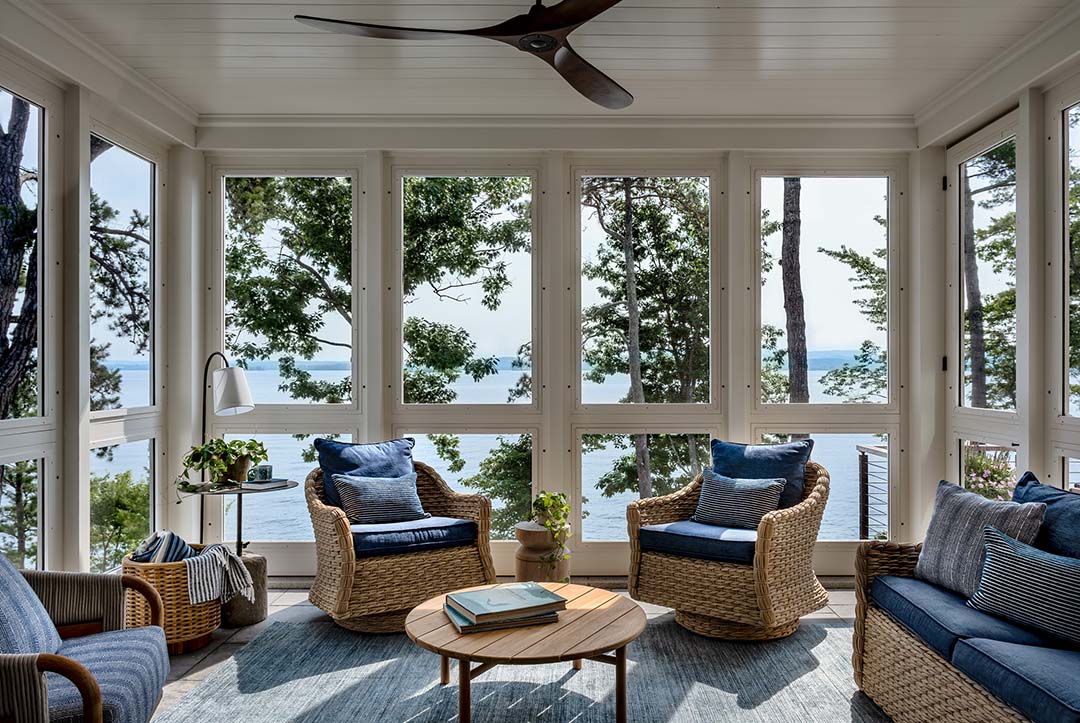
Exploring how wicker and rattan sit alongside the architecture, materials, and views of a New England home.
Woven furniture feels familiar in a New England home. A chair beside an open window or a group of seats on a porch can recall summer afternoons and rooms that welcome a little sand underfoot. In other settings, a simple cane back or a dark woven finish can feel distinctly contemporary.
What interests us is how that texture works within the room. At OLSON LEWIS + Architects, we consider interiors alongside the architecture and the way our clients live. Wicker and rattan can bring a lighter presence to substantial spaces, soften crisp lines, or connect furnishings to the colors of the surrounding landscape.
Around the dining table
A dining room brings furniture into close conversation with the architecture. The table and chairs sit against a background of windows, cabinetry, and millwork, and each contributes to the room’s balance.
Woven chair backs introduce texture while allowing glimpses through to the space beyond. Alongside a substantial wood table, that openness can keep the arrangement from feeling heavy. Upholstery adds another surface and makes the room comfortable for meals that stretch into the evening.
A photograph of the whole room can reveal these relationships: the weave of a chair, the grain of the table, and the proportions of the windows behind them.

Beside a window
A chair by a window can become one of the most used places in a home. Its position may follow the morning light, a view toward the garden, or the desire for a quiet place within a larger room.
Wicker and rattan often suit these spaces because their open structure gives them a relatively light visual presence. The furniture can sit comfortably near glazing while allowing the view to remain prominent.
In a coastal or lakeside home, the material’s color may also find connections outside—with grasses, weathered wood, or the trunks of nearby trees. Those relationships help the interior feel settled into its surroundings.
Within a layered living room
Living rooms tend to develop around several needs: gathering, reading, conversation, and sometimes a place to stretch out at the end of the day. A mix of furnishings gives each activity somewhere to happen.
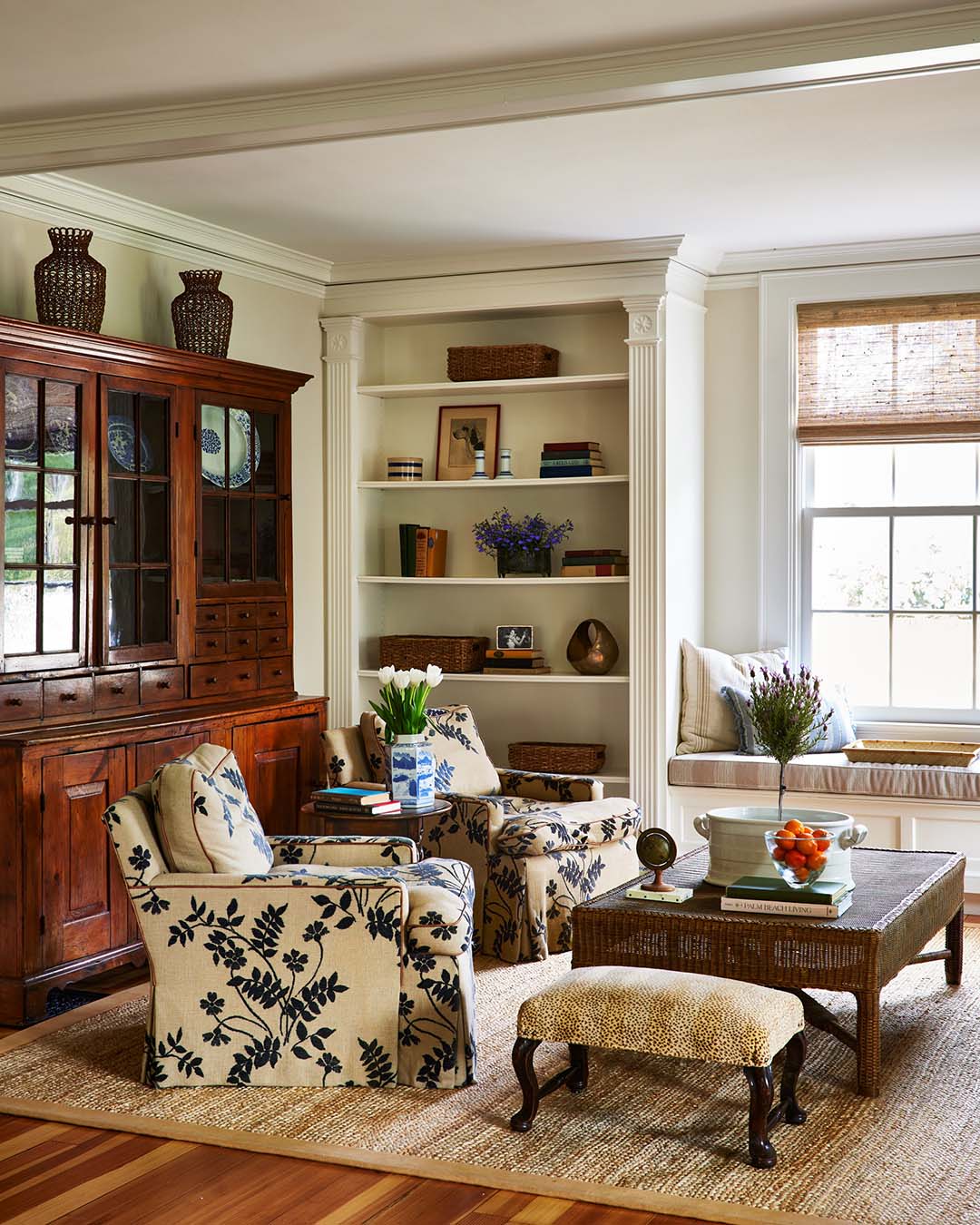
A woven chair brings a different texture alongside upholstered seating. Its frame and silhouette may echo the room’s architectural lines, while a cushion introduces color or pattern. A wicker coffee table can serve a similar role on a smaller scale.
The relationship matters more than the individual piece. Seen together, the furnishings should feel comfortable within the room and useful to the people who live there.
A softer note in the bedroom
Bedrooms offer room for quieter material choices. A woven headboard adds texture behind simple bedding, while a chair or bench gives the space another place to pause.
Here, the weave can work alongside painted millwork, wood floors, and linen without requiring a strong color statement. Light brings out the differences between those surfaces throughout the day.
An older piece can also carry personal history into a newly designed room. Furniture a client already owns may help establish its character, giving the finished space a familiar presence from the beginning.
At the threshold of indoors and out
Porches and terraces extend the life of a home into its setting. Their furnishings help define how people use that space—where they gather after a swim, eat together, or sit looking toward the water.
Woven furniture has a familiar place in these settings. Its texture can connect an outdoor seating area to the rooms inside, even as the materials change to suit exposure to the weather. Natural wicker generally belongs indoors; exterior spaces call for furniture designed for those conditions.

Part of the home’s character
Wicker describes a weaving technique; rattan is one of the natural materials used in woven furniture. Across their different forms and finishes, both offer opportunities to bring texture into a room.
Their role takes shape through the design as a whole. A pale woven chair may sit quietly against a garden view. A darker piece may give definition to a light interior. A treasured older chair may hold its place through several generations of family life.
These are the details we look for in our residential work: furnishings that support daily routines, sit comfortably with the architecture, and help a home feel like it belongs to the people who live there.