
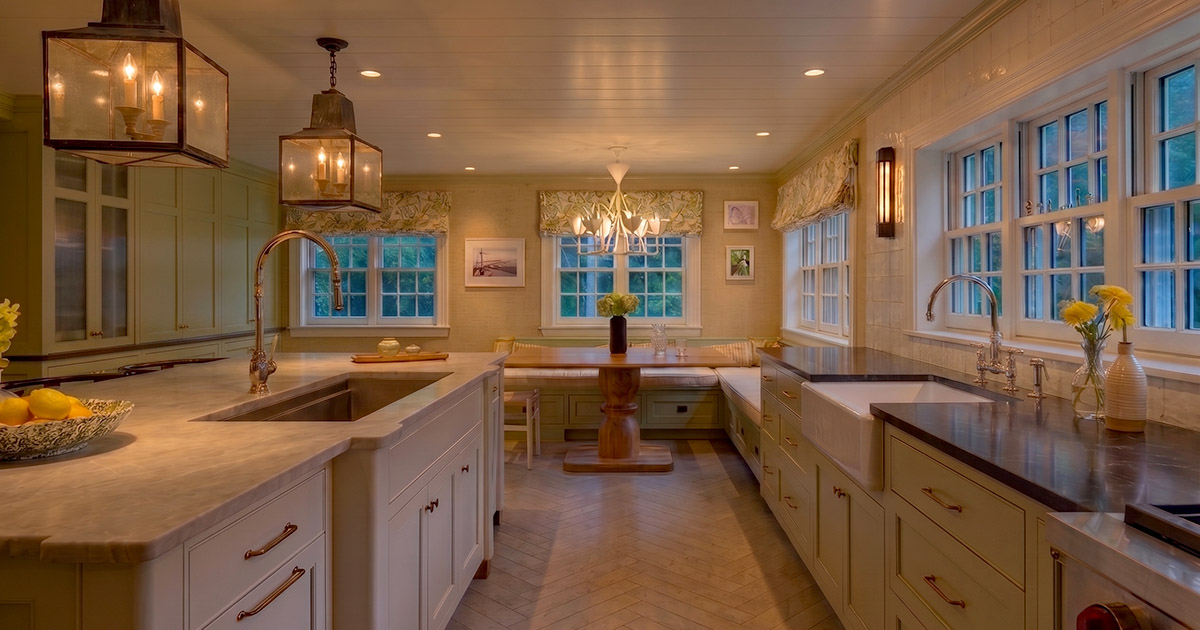
One Light Is Never Enough
Kaitlin Desbiens on why the best spaces are lit in layers.
A single light source may make a room visible, but it rarely makes it feel complete.
Good lighting comes in layers. Different sources work together to support activity, establish atmosphere, guide movement, and direct attention. This principle applies everywhere—from homes and workplaces to schools, laboratories, hospitality settings, and outdoor environments.
Kaitlin Desbiens, Associate and Director of Interior Design at OLSON LEWIS + Architects, recently discussed this idea with Parade. While the article focuses on outdoor lighting, the lesson is universal: lighting works best when no single fixture is asked to do everything.
Uniform Light Flattens a Space
When every surface receives the same amount of light, a space can feel flat and inflexible. It may be bright enough, but brightness alone does not create comfort, character, or visual hierarchy.
Layered lighting creates contrast. It allows some areas to come forward while others recede. It can make a large room feel more intimate, distinguish one activity from another, or bring texture and material into focus.
The goal is not more light. It is light with purpose.
Every Layer Has a Job
A thoughtful lighting plan typically combines several types of light:
- Ambient light establishes the overall level of illumination.
- Task light supports activities such as reading, cooking, learning, or detailed work.
- Accent light draws attention to architecture, artwork, materials, or landscape.
- Decorative light contributes character through the fixture itself.
No layer needs to dominate. The strength comes from how they work together—and how easily they can adapt as the space changes throughout the day.
Lighting Should Respond to Life
A kitchen needs to support food preparation and conversation. A workplace must accommodate focused tasks and collaboration. A hospitality space may need to feel active at one moment and intimate the next.
One lighting condition cannot serve all those experiences equally well.
By considering lighting early, designers can coordinate fixtures, daylight, controls, materials, and furniture as part of one composition. Users gain more control over how the space performs and feels, rather than choosing between fully lit and completely dark.
The same thinking extends outdoors, where layered lighting can define gathering areas, illuminate paths, reveal the landscape, and carry the experience of a building beyond its walls.
Design the Light, Not Just the Fixture
Lighting design is not simply the process of selecting attractive fixtures. It is the process of deciding what should be seen, how a space should feel, and what people need at different moments.
That is why one light is rarely enough. The most successful spaces use layers to create clarity, flexibility, and atmosphere—bringing the full design into view.
Explore interior design at OLSON LEWIS + Architects.

