
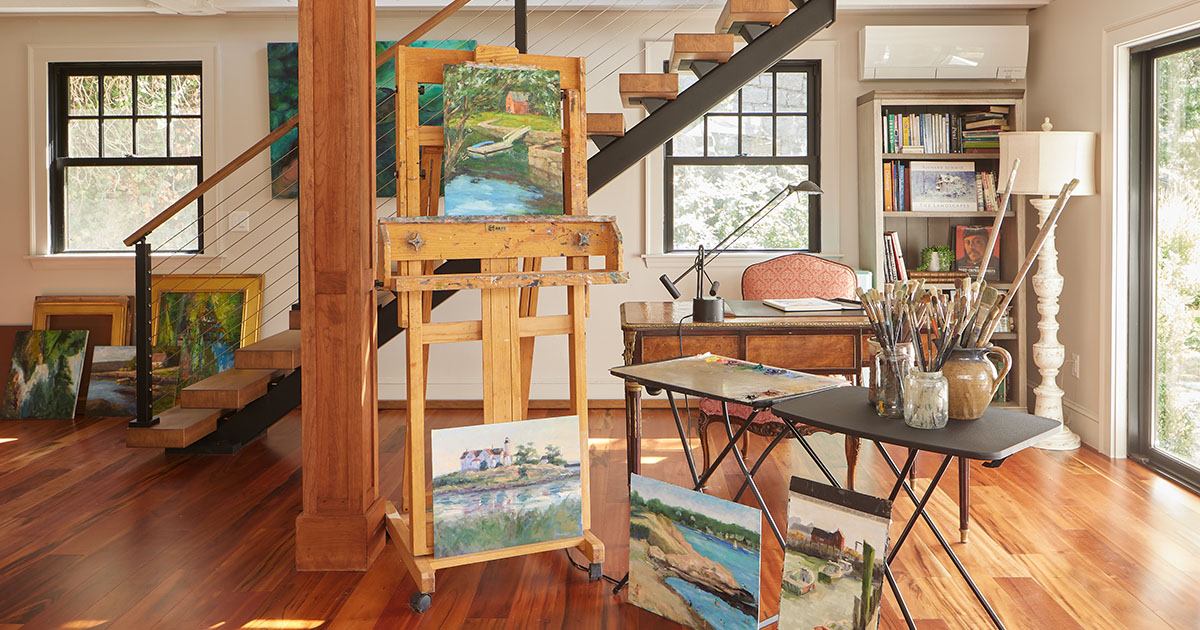
Seven ways to bring personal collections into conversation with architecture, furnishings, and the New England landscape.
A painting collected on a trip. A landscape that recalls a favorite place. A piece passed down through the family. The art we choose to live with often tells a story about who we are.
At OLSON LEWIS + Architects, those personal connections are a useful starting point for design. Understanding what a client loves helps us think about where a piece belongs, how it will be seen, and what should surround it. Artwork can influence the architecture of a room as well as its furnishings, giving direction to decisions about color, proportion, and materials.
1. Start with a piece you love
A favorite work of art can offer a starting point for a room’s palette. A quiet shade within a painting might become a wall color, while a stronger accent could appear in upholstery or a small object.
Often, the less prominent colors offer the most interesting possibilities. They can establish a comfortable background that allows the artwork’s bolder passages to stand out. Wood, stone, and textured fabrics can respond to the warmth or coolness of a piece without repeating its colors exactly.

2. Make a quiet corner worth spending time in
Art doesn’t need a large wall to have a meaningful presence. A reading corner, landing, or space beside a window can become a favorite part of the home through a thoughtful arrangement.
Consider the relationship between the artwork and a nearby chair, table, or lamp. A sculptural piece of furniture may be as much a part of the composition as the work on the wall. Scale is especially important in these smaller spaces: each element should have enough room to be appreciated, and the arrangement should support how the corner is used.
3. Bring the landscape into the conversation
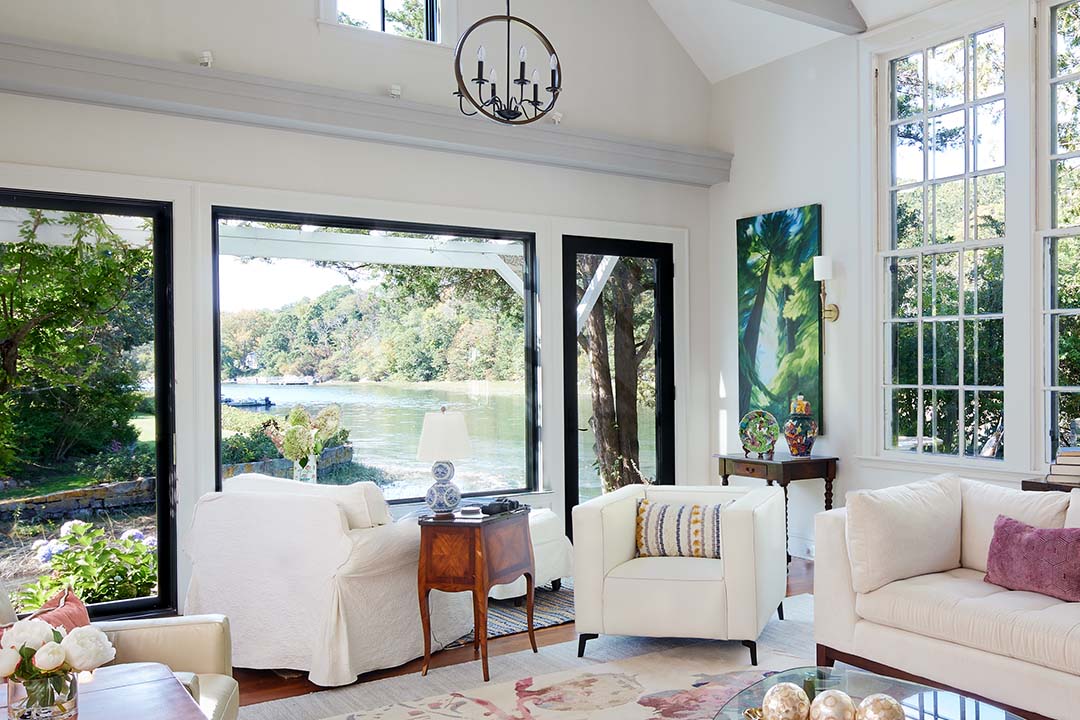
Landscape art can bring another interpretation of the outdoors into a room. Near a window, an abstract painting might echo the horizon, the colors of the shoreline, or the changing light across a lake.
The connection needn’t be literal. A piece can capture the feeling of a place through color and gesture. Thoughtful placement allows the artwork and the view to be enjoyed together, with comfortable seating that invites someone to stay.
4. Give art an architectural setting
Saturated wall colors can create a compelling setting for artwork, particularly when the piece introduces contrast. Millwork adds another layer, giving the art a defined place within the room.
The proportions deserve careful attention. A painting should sit comfortably within a paneled wall or between architectural elements, with enough space around it to appreciate both the work and its setting. A strong composition can give the room a focal point without overwhelming it.
5. Find balance above the fireplace
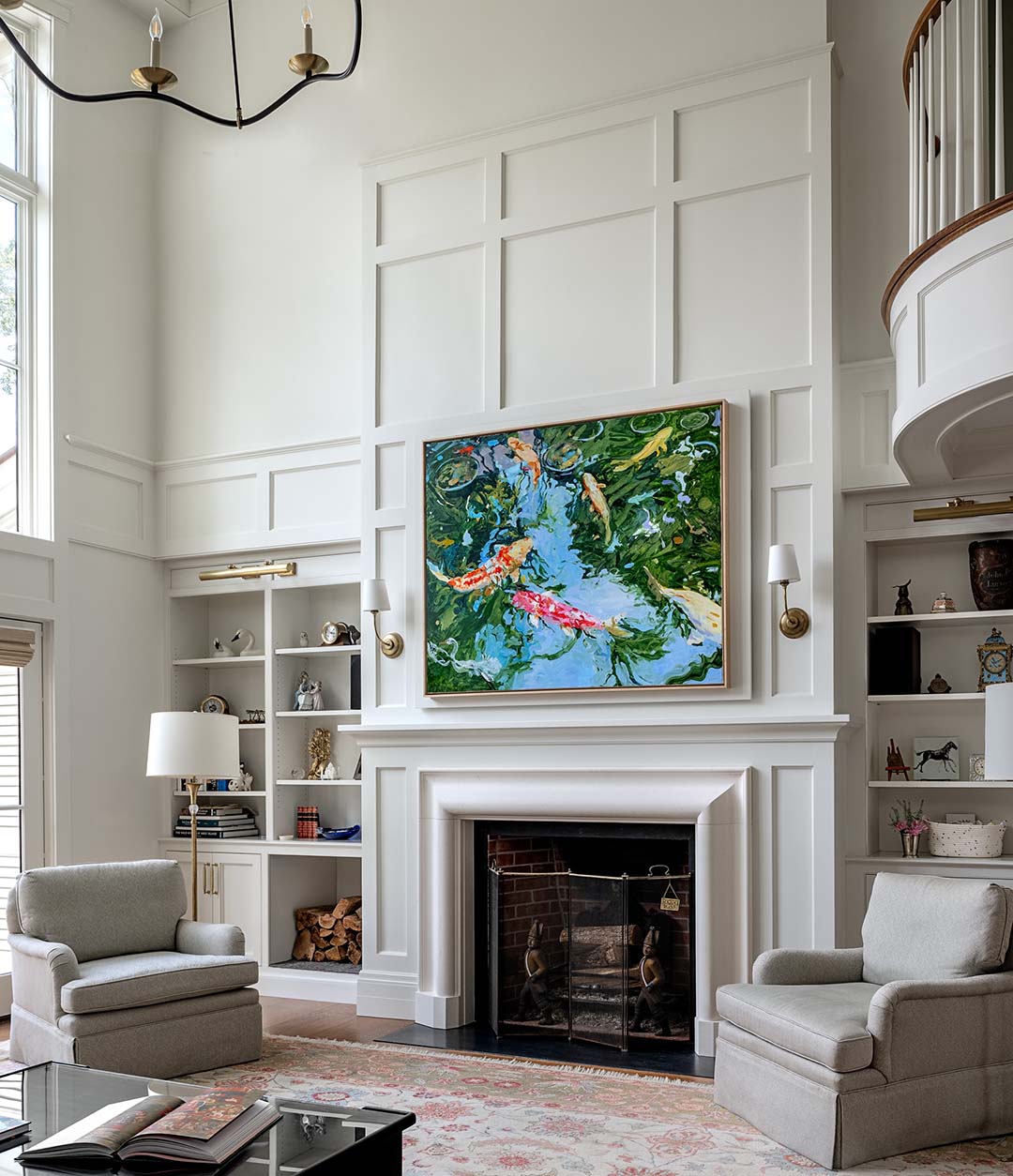
A fireplace often establishes the center of a room, making the space above it a natural place for art. The best arrangement considers the painting, mantel, and surrounding wall together.
The width of the artwork, the weight of its frame, and the distance above the mantel all affect the balance. Nearby shelving or moldings may suggest an alignment, while a more expressive piece can introduce movement within a symmetrical wall.
It also helps to consider the view from a seated position. Art should feel connected to the people using the room.
6. Carry color or pattern through textiles
Pillows, throws, and rugs provide an easy way to connect artwork with everyday living. A small amount of a color drawn from a painting can carry its presence beyond the wall.
Consider texture and pattern alongside color. Expressive artwork may sit comfortably with quieter fabrics; a restrained piece might welcome more pattern nearby. These choices help the room feel layered while giving the art space to be seen.

7. Let the room come together over time
Artwork feels at home when it has a relationship with the furnishings around it. A curved form in a painting might find an echo in a chair. A muted background color might appear again in a rug or woven fabric.
Those connections can be subtle. A few shared details allow the art and furnishings to feel comfortable together, while varied textures keep the room from becoming too uniform. Flowers, books, and collected objects bring an informal, changing layer to the arrangement, leaving room for the home to evolve.
The most personal interiors develop through conversations about what matters to the people who live there. Art can give those conversations a tangible starting point. Whether it shapes an entire room or finds its place in a quiet corner, a treasured piece helps make a house feel like home.

